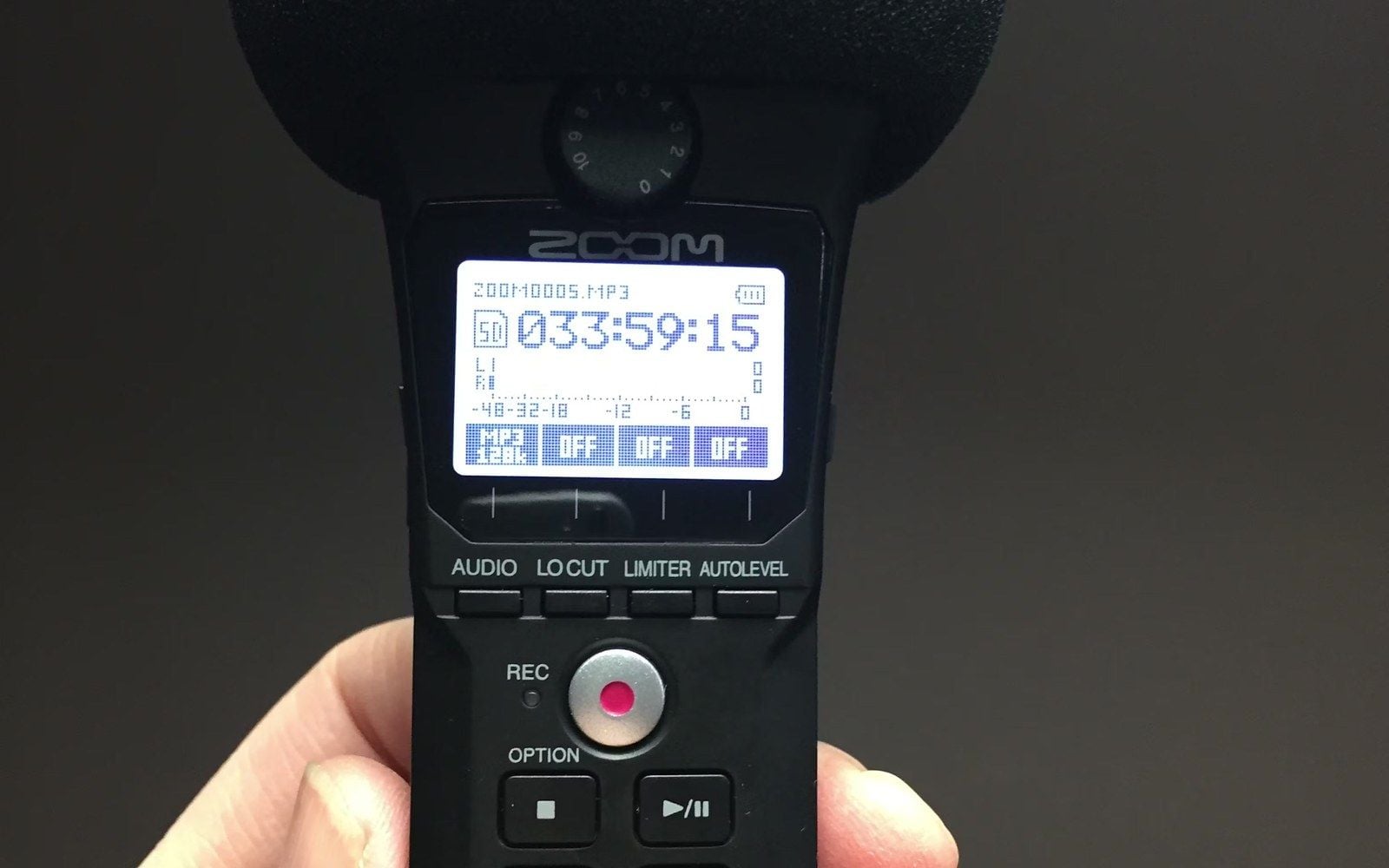
Is It Legal to Record a Meeting?
The short answer: Yes, in most places, if you are a participant in the meeting. United States federal law (18 U.S.C. § 2511(2)(d)) sets a one-party-consent floor: as long as at least one person in the conversation — including you — consents, recording is lawful, and 37 states plus Washington, D.C. follow that rule. Thirteen states go further and require every participant to consent: California, Connecticut, Delaware, Florida, Illinois, Maryland, Massachusetts, Montana, Nevada, New Hampshire, Oregon, Pennsylvania, and Washington. In the European Union, the GDPR does not ban recording, but it requires a lawful basis under Article 6 (usually legitimate interest or consent) and notice to everyone in the call. And everywhere, an employer's written policy can forbid recording even where the law permits it. Laws checked 19 November 2026; this is information, not legal advice.
Recording is usually legal, but legal and welcome are different things. A recording made without consent can still be a firing offense under company policy, a civil lawsuit, or a criminal charge in an all-party state.
| Consent rule | Where it applies | What it means |
|---|---|---|
| One-party consent | Federal law, 37 states + Washington, D.C. | One participant can consent. You can record a conversation you are part of without telling anyone. |
| All-party (two-party) consent | 13 states: California, Connecticut, Delaware, Florida, Illinois, Maryland, Massachusetts, Montana, Nevada, New Hampshire, Oregon, Pennsylvania, Washington | Every participant must consent before recording starts. |
| GDPR lawful basis | European Union / EEA | Recording needs a lawful basis under Article 6 — legitimate interest, consent, contract, or legal obligation — plus notice to participants. |
| Employer policy | Anywhere | A company policy can ban recording even where the law allows it. |
Is it legal to record a meeting I'm part of?
In one-party states, yes. If you are a participant, your own consent is legally sufficient, and you do not have to tell the other people on the call. Federal law sets this as the floor, and 37 states plus Washington, D.C. follow it. The rule comes from the federal Wiretap Act, which makes it legal to record a conversation when "one of the parties to the communication has given prior consent" (18 U.S.C. § 2511(2)(d)).
The other 13 states reject that default. They require the consent of every participant, which is why they are called all-party or two-party states. In those states, hitting record without telling everyone — even as a participant — can be a crime. The current list, from RecordingLaw.com's state-by-state guide (reviewed November 2026): California, Connecticut, Delaware, Florida, Illinois, Maryland, Massachusetts, Montana, Nevada, New Hampshire, Oregon, Pennsylvania, and Washington.
Which states require everyone's consent?
Thirteen states require all-party consent, but four of them apply the stricter rule only in part. RecordingLaw.com lists the all-party states as California, Connecticut, Delaware, Florida, Illinois, Maryland, Massachusetts, Montana, Nevada, New Hampshire, Oregon, Pennsylvania, and Washington. Connecticut and Nevada apply the rule only to phone calls. Oregon applies it to in-person conversations and video calls. Delaware has two conflicting statutes with no controlling appellate decision, so the safer course is to treat Delaware as all-party. Michigan, often mislabeled as all-party, is one-party for a participant recording their own conversation — its eavesdropping statute reaches only other people's private talk.
If you are on a call that crosses state lines, which state's law applies is not always obvious, and courts disagree on the answer. When in doubt, the conservative move is to get everyone's consent and satisfy the strictest state involved.
What are the penalties for recording without consent?
They range from civil damages to federal prison. Under the federal Wiretap Act, an illegal recording is a felony punishable by up to five years in prison and a $250,000 fine (18 U.S.C. § 2511(4)(a)). The person recorded can also sue under 18 U.S.C. § 2520 for actual damages or statutory damages of $100 per day or $10,000, whichever is greater. State all-party laws carry their own criminal and civil penalties on top of that.
Those penalties apply to the act of recording, not just to publishing. In most all-party states, making the recording itself — even if it never leaves your phone — is the violation. The way to avoid all of this is a yes from everyone before you start.
Is it legal to record a meeting at work?
Legally and by policy, the answer can be different. In a one-party state, recording a meeting with your boss or coworkers is generally lawful if you are part of the conversation, FindLaw notes. But most employers have a written policy on recording, and violating it can cost you your job even where the law would allow the recording. Secret recording also breaks trust and, depending on what you capture, can expose confidential company information or run into a court's discovery rules.
The practical rule for workplace meetings: check the employee handbook before you record, and if you record anyway, say so at the start. For interview and hiring contexts specifically, the consent rules are the same but the norms are stricter — see Recording Job Interviews: A Hiring Guide.
What does the GDPR require to record a meeting?
A lawful basis and notice. The GDPR does not ban recording meetings, but a recording containing personal data is processing, so the organization needs one of the Article 6 bases: legitimate interest, consent, performance of a contract, or a legal obligation. For routine internal meetings, documented legitimate interest is usually the better fit, because consent given inside an employment relationship is often not considered freely given, the UK Information Commissioner's Office (ICO) explains in its legitimate-interests guidance.
Whichever basis you pick, participants must be told: what is being recorded, why, who can access it, and how long it is kept. Under Articles 13–15, people also have rights to access and, in many cases, to have the recording erased. Before you switch on any recorder for a meeting with EU or UK participants, write down the lawful basis and give notice. No basis and no notice is where organizations get into trouble.
Do the rules change if an AI notetaker is recording?
No. Consent applies the same way whether the recorder is a human, a visible bot, or software capturing the browser tab. An AI notetaker that joins the call as a named participant is visible, which is why hosts usually spot it immediately and can remove it — that visibility does not by itself satisfy an all-party state's consent requirement. A notetaker that records the meeting tab without joining is invisible, so the meeting owner has to handle consent manually.
Meetbook does both, which is why the consent question comes up in both modes. Meetbook's Chrome extension records the meeting tab, so no bot joins the call; Meetbook also offers a calendar notetaker that joins as a participant, and an Android app for in-person meetings. Meetbook's own guidance is to ask before you hit record, whatever the mode. For the difference between a bot that joins and a botless recorder, see Meeting Bots vs Botless Recorders.
How do you ask for consent?
One line at the top of the call is enough in almost every case: "I'm going to record this so no one misses the action items — anyone want me to stop?" It is specific, it names the reason, and it gives people a way out without friction. If someone says stop, you stop.
The one-line ask works in any jurisdiction, but the safest pattern is to say it twice: once in the calendar invite or meeting description, and once aloud when the call starts. For in-person conversations, the same line works before you place a phone on the table to record — see How to Record an In-Person Meeting for the rest of that setup.
Is Meetbook's recording approach consent-friendly?
Meetbook records from the browser tab with no bot in the call, so nothing new joins the meeting and nobody has to admit a participant. Because no bot appears, the responsibility to ask sits with the person recording, which is exactly where the law puts it in all-party states. The recorded audio, transcript, and notes stay under the meeting owner's account, and Meetbook does not train AI on customer recordings, transcripts, or notes. When someone wants a recording gone, Meetbook accounts can delete it. Learn more about how Meetbook records in Google Meet at Meetbook for Google Meet.
Key terms
- One-party consent: a rule where one participant's consent is enough to record a conversation. Federal law and 37 states plus Washington, D.C. use it.
- All-party (two-party) consent: a rule requiring every participant's consent before recording. Thirteen states use it.
- Lawful basis: under GDPR Article 6, the legal reason an organization must have to process personal data such as a meeting recording.
- Legitimate interest: a GDPR lawful basis used for routine recording when the organization's interest is balanced against people's rights and documented.
- Eavesdropping: recording or intercepting a conversation you are not part of, which is criminalized more broadly than participant recording.
FAQ
Can I record a meeting without telling anyone?
In a one-party state, yes, if you are a participant. In the 13 all-party states, no — every participant must consent first. Under the GDPR, recording without notice to participants is not allowed.
What are the all-party consent states?
California, Connecticut, Delaware, Florida, Illinois, Maryland, Massachusetts, Montana, Nevada, New Hampshire, Oregon, Pennsylvania, and Washington — thirteen states, with Connecticut and Nevada applying the rule only to phone calls and Oregon to in-person and video conversations.
Can my employer fire me for recording a meeting?
Yes. Even in a one-party state where the recording is lawful, violating a company recording policy can be grounds for discipline, and FindLaw notes employers can forbid recording regardless of state law.
Do I need consent to record a Zoom, Google Meet, or Teams call?
The platforms usually show a recording notification, but that notification is not consent. In an all-party state you still need an explicit yes from every participant, and in the EU you need notice plus a lawful basis.
Is it legal to record a meeting in the EU?
Yes, with a lawful basis under GDPR Article 6 and notice to participants. For internal meetings, documented legitimate interest is usually the right basis; consent is rarely freely given in an employment relationship.
Does an AI notetaker need consent?
Yes. A bot that joins visibly and a botless recorder that captures the tab are both recording, so both must satisfy the same consent rules — all-party states require a yes from everyone.
Is this legal advice?
No. This is general information checked 19 November 2026 against the sources linked above. Recording law depends on your state or country and on your workplace, so ask a lawyer for your specific situation.